
Clean toys with soap, hot water, dishwasher, steam, or diluted bleach; rinse and air dry. Step-by-step guide on How To Disinfect Baby Toys. Clean toys fast, remove germs, and keep your little one healthy and happy.
As a child health writer and parent, I bring practical, tested advice on how to disinfect baby toys. This guide explains safe, simple methods for common toy types, when to clean them, and how to choose the right disinfectant. You will find step-by-step instructions, safety tips, and real-world tips I learned while caring for infants. Read on to master how to disinfect baby toys with confidence.

Why disinfect baby toys?
Toys pick up germs from hands, floors, and mouths. Babies explore with touch and taste. Regular disinfection lowers the risk of infections like colds, stomach bugs, and some bacterial illnesses. Knowing how to disinfect baby toys helps protect immune-weakened infants and keeps family illness cycles short.

Know toy materials and labels
Different toys need different care. Check labels before you clean. Common materials and how they respond:
- Plastic and silicone: Durable and usually dishwasher-safe. Good for many disinfecting methods.
- Soft plush: Washable in machines if labeled. Some need surface cleaning only.
- Wood: Porous and can warp. Avoid soaking; opt for surface cleaning and drying.
- Electronic toys: Wipe with disinfectant wipes or cloths. Avoid submersion.
- Painted or battery-operated parts: Test a small spot first. Strong cleaners can remove paint or damage components.
Knowing the material guides how to disinfect baby toys safely and effectively.
Step-by-step methods to disinfect baby toys
Below are practical methods to disinfect baby toys. Choose the method that fits the toy type and label.
1. Daily quick clean: soap and water or wipes
- Use mild dish soap and warm water. Wash with a cloth or soft brush.
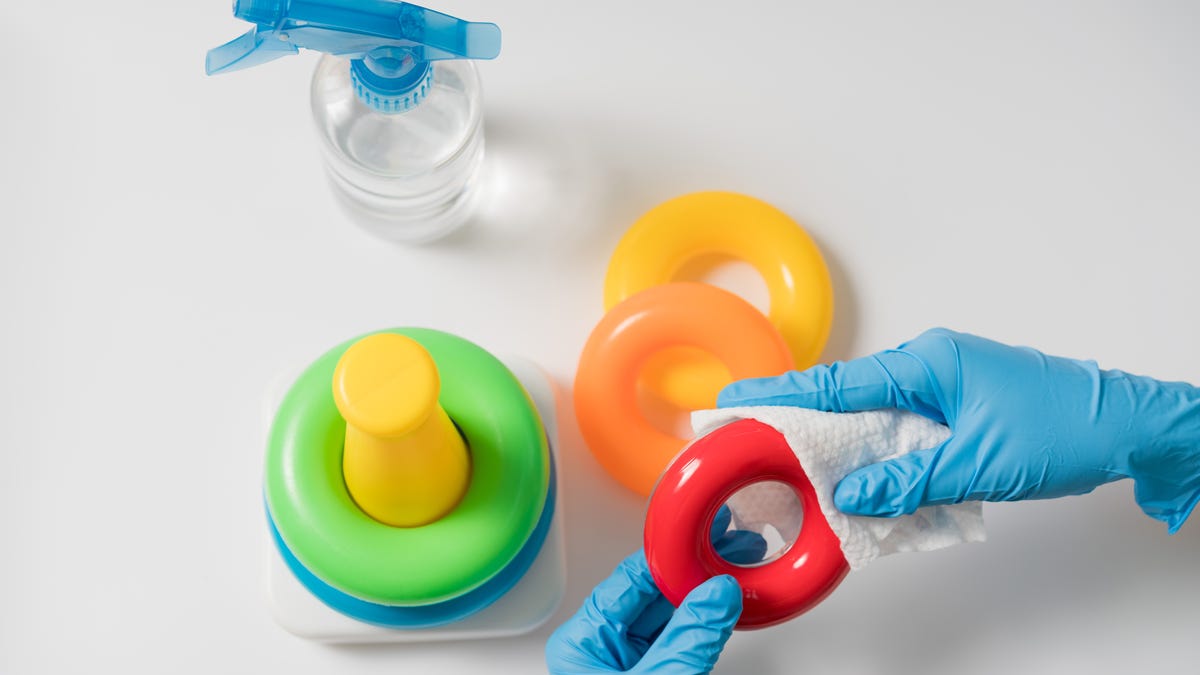
- For quick cleaning on non-porous toys, use baby-safe disinfectant wipes. Wipe, then air dry.
- This method handles everyday grime and light germ removal.
2. Machine washing for plush toys and fabrics
- Use hot water if the label allows. Add baby-safe detergent.
- Use a mesh laundry bag for small toys. Dry on high heat if allowed, or air dry thoroughly.
- Machine wash is ideal for stuffed animals and fabric toys that can take heat.
3. Dishwasher for hard plastic and silicone
- Place toys on the top rack. Use a normal cycle with heated dry if the toy label allows.
- Dishwasher cleaning saves time and uses high heat for disinfection.
- Avoid placing toys with stickers, batteries, or delicate paint in the dishwasher.
4. Boiling and steam sterilization
- Boil small hard toys without electronics for 3–5 minutes. Use tongs to remove.
- Steam sterilizers used for bottles can sanitize many silicone and hard plastic toys.
- Boiling and steam work well for teething rings and teethers.
5. Diluted bleach solution for deep disinfection
- For non-porous toys, use a diluted household bleach solution. A common safe ratio is 1 tablespoon of regular household bleach per gallon of water. Immerse or wipe the toy for 2–5 minutes. Rinse well and air dry.
- Only use bleach on bleach-safe surfaces and where the label permits. Keep bleach away from a child’s mouth until fully rinsed.
- Never mix bleach with ammonia or other cleaners.
6. Hydrogen peroxide and alcohol
- 3% hydrogen peroxide can disinfect hard, non-porous toys. Apply, let sit briefly, then rinse.
- Isopropyl alcohol (70%) works on small surfaces with a short contact time but may remove paint. Rinse if the product will be mouthed.
- Use these sparingly and with good ventilation.
7. UV sanitizers: pros and cons
- UV-C devices claim quick sanitizing without water. They can work for small hard toys.
- Effectiveness varies by device and exposure time. Keep expectations realistic and follow manufacturer instructions.
- UV does not remove dirt; clean toys first.
8. What to avoid
- Do not use essential oils, untested “natural” sprays, or undiluted cleaners on baby toys.
- Avoid soaking wooden toys and painted surfaces that may flake.
- Never use concentrated chemicals near infants.
These methods cover most needs when you want to know how to disinfect baby toys properly.
Frequency: when and how often to clean
How often you disinfect depends on use and exposure.
- Daily spot cleaning: For toys that go in the mouth or fall on the floor. Wipe with soap and water or a wipe.
- Weekly full clean: For frequently used toys at home, wash or sanitize weekly.
- After illness: Clean and disinfect all toys the sick child used. Use stronger methods like boiling or dilute bleach for non-porous items.
- Outdoors or daycare: Clean more often if toys are shared with others.
Set a simple routine to avoid buildup and reduce the worry of germs.

Safety tips and precautions
Safety matters as much as cleanliness when you disinfect baby toys.
- Read labels: Follow manufacturer instructions for cleaning and drying.
- Rinse well: Remove residue from soaps or disinfectants before giving toys back to babies.
- Air dry: Let toys dry fully to prevent mold. Drying in sunlight can help.
- Separate sick-child items: Keep those toys aside until cleaned.
- Check for damage: Cleaning can loosen parts. Inspect toys regularly for cracks or loose pieces.
- Store clean toys properly: Use a dry, clean bin or shelf. Avoid damp basements.
Following these precautions keeps cleaning safe and effective.
Personal experience and common mistakes
As a parent, I relied on wipes and dishwasher cycles for daily toy care. I learned key lessons fast:
- Lesson 1: Over-bleaching faded a favorite teether’s color. Now I test a hidden spot first.
- Lesson 2: Plush toys need thorough drying. A damp stuffed animal grew mildew once; I now use dryer heat or sun.
- Lesson 3: Electronics need careful wiping. I removed batteries before cleaning and used damp cloths only.
Common mistakes to avoid:
- Mistake 1: Using strong cleaners on painted or porous toys. That can strip paint.
- Mistake 2: Not rinsing well after disinfection. Residue can taste bad or irritate.
- Mistake 3: Assuming all toys are dishwasher-safe. Always check the label.
These real-life tips help you practice how to disinfect baby toys without causing damage.

Frequently Asked Questions of how to disinfect baby toys
Can I disinfect wooden baby toys?
Yes. Wipe them with a damp cloth and mild soap. Avoid soaking; dry promptly to prevent warping and mold.
Is bleach safe to use on baby toys?
Bleach can be safe for non-porous toys when properly diluted and rinsed. Use sparingly and follow safe dilution and contact times.
Can I put toys in the dishwasher?
Many hard plastic and silicone toys are dishwasher-safe on the top rack. Avoid toys with stickers, paint, or electronics.
How do I disinfect stuffed animals?
Machine wash on hot if the label allows, then dry on high heat. For non-washable plush, surface-clean with soap and steam if safe.
How often should I disinfect toys after a sick child recovers?
Disinfect toys immediately after the child is better. For best practice, wash and disinfect toys the child used before allowing others to use them.
Conclusion
Keeping toys clean is simple with the right methods. Choose cleaning steps that match the toy material. Rinse, dry, and inspect toys after cleaning. Start a small routine today and make toy care part of healthy habits. Try one method this week and see how easy it is to protect your child from common germs. Leave a comment below or subscribe for more parenting health tips.


Leave a Reply