
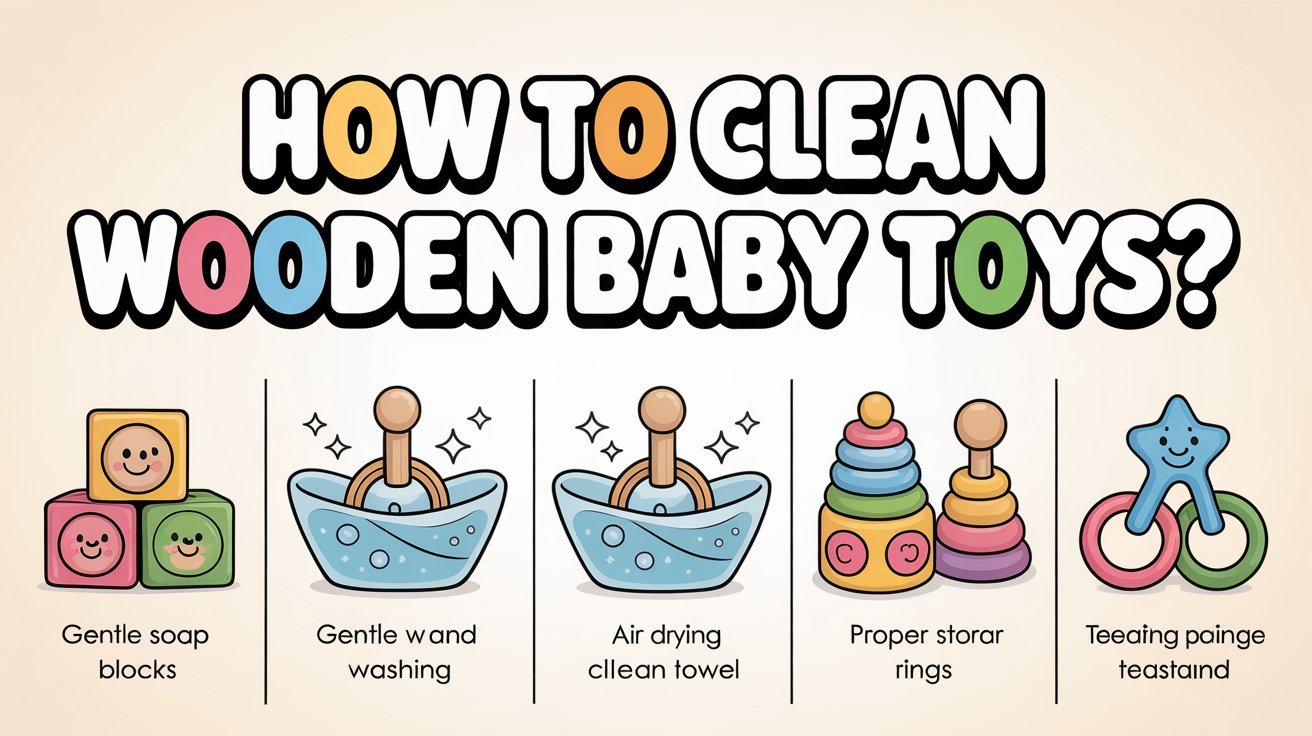
Wipe with mild soap and water, dry fully, and oil with food‑safe oil to protect the wood.
As a parent and child-safety advocate with years of hands-on experience caring for wooden toys, I will walk you through exactly how to clean wooden baby toys safely and effectively. This guide covers types of wood, safe cleaning solutions, step-by-step cleaning and sanitizing methods, drying and finishing tips, and routine care. You will find practical examples, mistakes to avoid, and clear steps you can use today to keep toys safe, durable, and beautiful.

Why cleaning wooden baby toys matters
Wooden toys are durable and often heirloom quality, but they still collect saliva, food, dust, and germs. Knowing how to clean wooden baby toys reduces illness risk and preserves finish and safety. Regular, correct cleaning keeps paint, joins, and seals intact and extends toy life.
Understanding wood types and finishes
Not all wooden toys react the same to cleaners. Solid hardwoods with natural oil finish tolerate gentle water and oiling better than soft woods or toys with painted surfaces. Toys with non‑food‑safe paint or water-sensitive glue need gentler care. When learning how to clean wooden baby toys, first identify whether the toy is sealed with varnish, wax, oil, paint, or left raw.

Safe cleaners and supplies
Use simple, mild supplies that do not harm wood or baby health. Recommended items:
- Mild liquid dish soap diluted in warm water for routine cleaning.
- White vinegar diluted 1:10 with water as a gentle disinfectant for sealed wood.
- Food‑grade oils like fractionated coconut oil or walnut oil for conditioning.
- Soft cloths, microfiber, and a soft brush for crevices.
- A clean towel and a well‑ventilated drying area.
Avoid bleach, harsh detergents, or soaking wooden toys for long periods.
Step-by-step: How to clean wooden baby toys (routine and deeper clean)
Follow these clear steps depending on soil level.
Routine wipe (daily or after light mess):
- Mix a few drops of mild dish soap into a bowl of warm water.
- Dip a soft cloth, wring well so it is damp not wet.
- Wipe all toy surfaces, working into grooves with a soft brush.
- Rinse cloth in clean water, wipe again to remove soap residue.
- Dry immediately with a towel and air dry completely.
Deeper clean or sticky residue:
- Use the routine wipe first.
- For tougher spots, apply a small amount of white vinegar diluted 1:10 on a damp cloth and rub gently.
- Immediately rinse with a clean damp cloth and dry thoroughly.
Oiling and conditioning (monthly or as needed):
- Ensure toy is dry and clean.
- Apply a small amount of food‑grade oil to a cloth and rub thinly over surfaces.
- Wipe off excess after 10–15 minutes and buff to a soft sheen.
When learning how to clean wooden baby toys, always dry quickly and avoid soaking. These steps keep wood stable and seals intact.

Sanitizing vs cleaning: what you need to know
Cleaning removes dirt and germs; sanitizing reduces microbes to safer levels. For wooden toys, cleaning is primary because wood can absorb liquids and sanitizers. Use diluted vinegar or brief exposure to steam from a safe distance for sealed toys. Do not submerge wooden toys in sanitizer solutions or use bleach, as this can break down glue and finishes.
Drying, oiling, and finishing after cleaning
Proper drying prevents warping, mold, and loosening of joints. Steps to finish after cleaning:
- Pat dry with a towel immediately after wiping.
- Air dry in a warm, ventilated spot away from direct sun to avoid cracking.
- Oil sealed or unfinished wood occasionally with a thin coat of food‑safe oil to restore moisture.
- Reapply a non‑toxic wax or oil finish if the original finish wears off and you plan long‑term restoration.
Knowing how to clean wooden baby toys includes knowing when to re‑finish to preserve safety and look.

Maintenance, storage, and inspection
Routine care keeps toys safe and pretty. Tips:
- Inspect toys weekly for cracks, loose parts, or splinters and remove damaged toys from use.
- Store toys dry in breathable containers or shelves; avoid plastic bins that trap moisture.
- Rotate toys to reduce continuous wear and to make inspection easier.
- Clean toys after illness or when visibly soiled, and oil them monthly if used often.
Personal tip: I store wooden blocks on open shelves and wipe them down weekly. Once, ignoring a small crack led to splinters; I learned to inspect joins more closely after cleaning.
What to avoid when cleaning wooden baby toys
Avoid methods that damage wood or finish:
- Do not soak wooden toys in water or detergent.
- Do not use bleach, undiluted vinegar, or strong chemical disinfectants.
- Do not place wooden toys in the dishwasher or microwave.
- Avoid abrasive pads that strip paint or finish.
Following safe practices when learning how to clean wooden baby toys helps prevent costly or unsafe damage.

Frequently Asked Questions of how to clean wooden baby toys
How often should I clean wooden baby toys?
Clean toys after visible dirt or soiling and wipe frequently used toys weekly. Oil or condition toys monthly if they see heavy use to prevent drying.
Can I use vinegar to sanitize wooden toys?
Yes, a dilute vinegar solution (1 part vinegar to 10 parts water) is a gentle sanitizer for sealed wood. Always rinse and dry immediately to protect the finish.
Are dishwashers safe for wooden toys?
No, dishwashers expose wood to heat and soaking that warp and crack the wood and damage glue. Hand cleaning is safer.
How do I remove mold from wooden toys?
Light mold can be wiped with a cloth dampened in diluted vinegar, then rinsed and dried thoroughly. For severe mold or internal contamination, discard the toy.
What oils are safe for finishing wooden baby toys?
Use food‑grade oils such as fractionated coconut oil, walnut oil, or beeswax and oil blends designed for toys. Avoid mineral oil with additives that are not labeled food‑safe.
Can painted wooden toys be cleaned the same way?
Yes, gently, if paint is intact and non‑toxic. Use a damp cloth with mild soap and avoid scrubbing that might remove paint or expose wood.
Should I sanitize toys after my child is sick?
Clean first, then sanitize selectively for sealed wooden toys using diluted vinegar or brief steam exposure. Discard any toy that absorbed bodily fluids and cannot be cleaned or dried properly.
Conclusion
Cleaning wooden baby toys is simple when you follow safe steps: identify the finish, clean with mild soap and warm water, avoid soaking, dry promptly, and oil or condition as needed. Regular inspection and gentle maintenance preserve safety and beauty and help prevent illness. Start applying these steps today to protect your child and your toys, and consider subscribing or leaving a comment to share your experiences or questions about how to clean wooden baby toys.

Leave a Reply